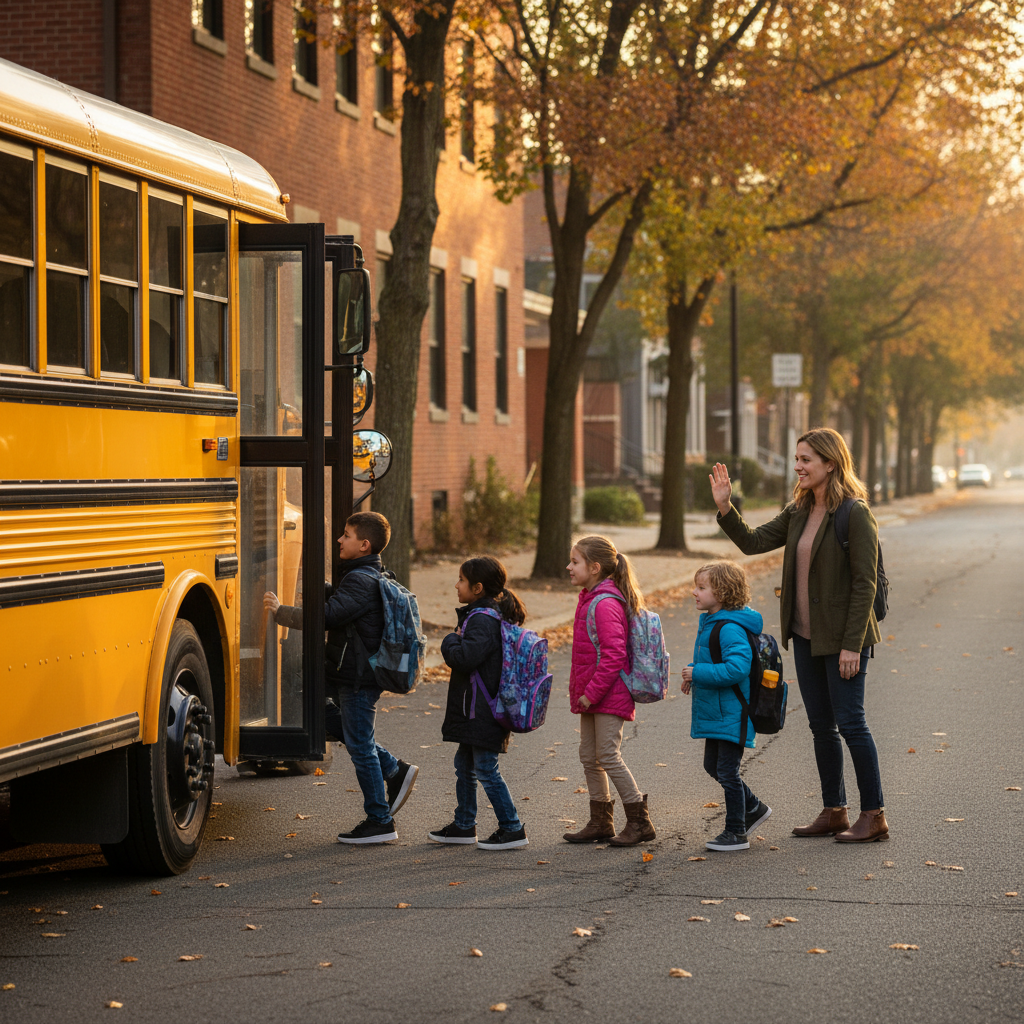
Choosing an after-school program involves more than finding an activity your child enjoys. The trip from school to the program—and from the program to home—has to work for your family’s schedule and the program’s procedures. A few specific questions can reveal gaps before the first day, when there is still time to compare options or make a backup plan.
Onward Families helps families navigate PreK–8 opportunities. As you explore options on [Onward Families](https://onwardfamilies.org/opportunities), treat transportation as part of the program decision, not a detail to sort out later. Ask the program directly about its current arrangements; procedures and costs can vary.
1. Pin down the pickup window, not just the pickup time
“Pickup is at 5” can mean different things. It might mean children must be collected at exactly 5 p.m., or that families may arrive any time during a window. Ask for the earliest and latest permitted pickup times, when staff begin releasing children, and what happens if you arrive near the end of the window.
If the program transports children from school, ask about the departure time, how long the trip usually takes, and where children are handed over. Confirm whether the program waits for students who are delayed at dismissal or whether families need to arrange another option. If a school-day schedule changes, ask how the program communicates a revised pickup plan.
Compare the answers with your actual routine. For example, if one caregiver finishes work at 5:15, a program that ends at 5 may not be workable even if the trip home is short. Include traffic, parking, and the time needed to reach the pickup location—not only the advertised program hours.
2. Confirm who may collect your child
Ask how the program identifies adults authorized to pick up a child and what steps are required to add or change a person. Check whether the process differs for a one-time pickup, a recurring arrangement, or a last-minute change. Find out what identification an unfamiliar authorized adult should bring and how staff handle a mismatch between the name provided and the person arriving.
Be clear about who is responsible at each handoff. If a child travels from school to a program, ask who receives them at school and who takes responsibility when they arrive. If a child is released to a caregiver at the program, ask where the handoff takes place and whether the adult must check in with staff.
Use a realistic example: “My sister is picking up on Tuesdays, but my neighbor may need to help once if I’m delayed. What do I need to do, and by when?” The answer should give you a process you can follow. Do not assume that a verbal message to one staff member is enough; ask how changes should be communicated and confirmed.
3. Make a plan for delays and missed connections
A useful transportation plan explains what happens when the normal plan fails. Ask whom you should contact if you are running late, how the program reaches families about delays, and what staff do if the expected pickup adult does not arrive. Confirm where children wait, who supervises them, and whether there is a limit on how long staff can remain with a child.
For school-to-program travel, ask what happens if a bus is late, a child misses the usual departure, or the school dismisses students differently than expected. Ask whether families are contacted before a child is considered missing from the group, and what number or communication method they should monitor. Clarify what the program expects you to do if you cannot be reached right away.
Write down one practical backup for your household, such as a second authorized adult who can reach the pickup site. Then ask whether that person can realistically meet the program’s identification and notification requirements. A backup that cannot be activated in time is not a useful backup.
4. Ask for the full cost and schedule in writing
Transportation may be included, optional, or arranged separately. Ask whether there is a transportation charge, whether it is billed per day or on another schedule, and whether fees change when a child uses the service only on certain days. Ask about any charges associated with late pickup, if applicable, and when families are told about them.
Request a written description of the days, routes or pickup locations, timing, and fees that apply to your child. Check whether the transportation arrangement follows the program calendar or differs on early-dismissal days, holidays, or other schedule changes. If a family’s pickup plan changes during the year, ask whether there is notice needed or a change in cost.
Compare the complete routine, not just the listed program fee. A lower-cost option may require a caregiver to make an extra trip; a more convenient route may not fit your work hours. Onward Families’ [how-it-works page](https://onwardfamilies.org/how-it-works) can help you understand the site’s role as a family navigation resource, while the program itself should confirm its transportation terms.
5. Use a short checklist, then take the next step
Before deciding, check that you can answer these questions:
• What is the pickup window, and where does the handoff happen?
• Who is authorized to collect my child, and how do I update that list?
• Who supervises children during travel and while waiting for pickup?
• What should I do if the ride, school dismissal, or caregiver is delayed?
• What are the transportation fees, and which days and schedule changes do they cover?
• Can the program send me its current procedures and costs in writing?
If an answer is unclear, write down the exact scenario you need resolved and ask the program to walk through it. For instance: “If school dismissal is delayed and I cannot reach the pickup location by the usual time, where will my child wait, and who should I call?” A clear answer is more useful than a general assurance that staff will handle it.
Next, compare the written details with your family’s weekly schedule and identify one backup adult or arrangement. Use [Onward Families’ insights](https://onwardfamilies.org/insights) to continue exploring family-navigation guidance, and contact each program directly to confirm current transportation details before enrolling.
Common questions
### What should I ask first about after-school pickup?
Ask for the earliest and latest pickup times, the exact handoff location, and what staff do if you arrive late. Confirm whether the stated time is a firm deadline or part of a pickup window.
### Should I rely on a verbal answer about transportation costs or backup plans?
Ask the program for its current fees and procedures in writing. Written details make it easier to compare schedules, understand how changes are handled, and share the plan with other caregivers.