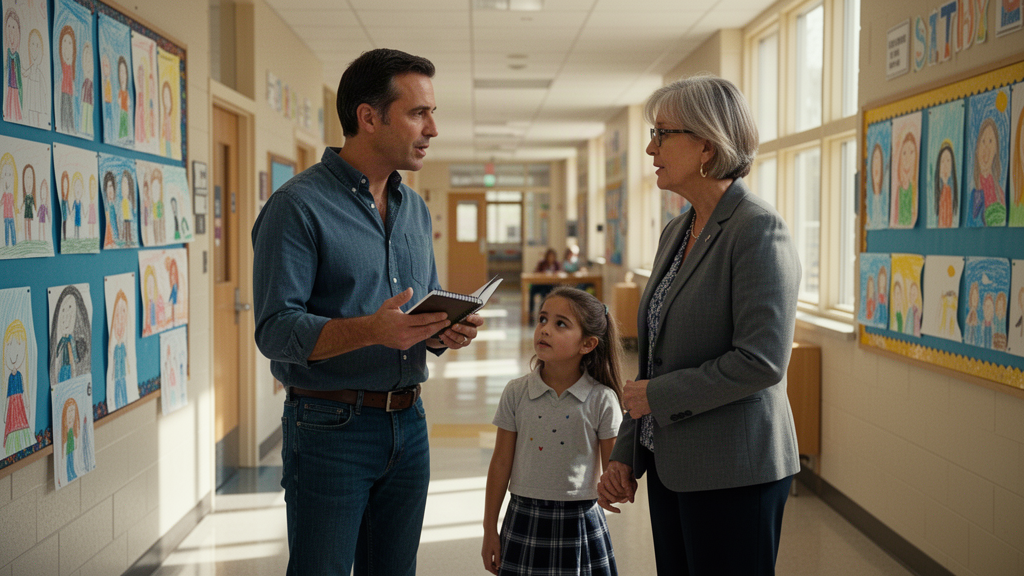
A school or community referral can point your family toward a useful next step, but it may not be clear who will contact you, what you need to do, or how long to wait. A small follow-up routine can make those details easier to manage while keeping communication respectful and focused.
Onward Families is a family navigation site for PreK–8. You can use it to explore the site’s [how it works](/how-it-works), browse [opportunities](/opportunities), and read [insights](/insights). For follow-up, pair that exploration with a contact log you control. The log is a planning tool—not a place for confidential child records.
1. Before you leave, clarify the handoff
When someone suggests a referral, ask what the referral means in practice. Is the person making the connection, or should you contact the organization yourself? Is there a particular person or department to ask for? What should you expect after making contact?
A useful, neutral question is: “What would you recommend I do first, and when would it make sense to follow up?” If the referral is being sent on your behalf, ask how you will know it was sent and whether you should also reach out. You do not need to share more than is necessary to understand the process.
For example, a caregiver who receives a community program’s name at a school meeting might write down the organization, the suggested contact method, and the staff member’s guidance about the next step. That is more actionable than a note that simply says “call program.” If a detail is unclear, ask before the meeting ends when possible; otherwise, send a brief question through the usual school or organization channel.
2. Keep a contact log that is useful—and limited
Choose a format you can return to, such as a paper notebook, a personal calendar, or a basic document. Record only what helps you manage the handoff:
• Date and organization or person contacted
• The channel used, such as phone or email
• A short note on the request or response
• The agreed next step and who is responsible
• A date to check in, if one was discussed
Keep the log factual and brief. For instance: “Tuesday: emailed the family liaison to ask about the referral process. No reply yet. Check in next week.” Avoid adding detailed descriptions of a child’s circumstances, health information, records, or other sensitive material. If a school or organization needs information, use the communication method it recommends rather than putting confidential details in a general planning log.
Decide who in your household needs access to the log and store it accordingly. Onward Families is a navigation site; do not treat it as a confidential child-record system or assume it is the place to store private notes.
3. Make the first contact clear and easy to answer
A first message does not need to tell the whole story. State who referred you, what you are asking about, and how the organization can respond. Include a preferred way and reasonable time to reach you if that is helpful. Before sending, check that you have the right contact information and that you are not including unnecessary personal details.
For example: “Hello, I’m following up after [name or role] at [school or organization] suggested I contact you about [program or service]. Could you let me know the next step and whether I should complete anything before we speak? I’m easiest to reach by [method]. Thank you.” Adapt the wording to your situation and the organization’s process.
If the referral involves more than one organization, contact one at a time unless you have been advised otherwise. That makes it easier to tell which person responded and what each next step refers to. Keep a copy of the message or note the date and channel in your log.
4. Set a follow-up point without assuming a timeline
Response times vary, so avoid treating silence as a yes or a no. If the person gave you a timeframe, note it and check in after that point. If no timeframe was offered, choose a reasonable date for yourself to review the status, then send a short, courteous follow-up if you still need an answer.
A follow-up can be as simple as: “I’m checking in on my message from [date] about [topic]. Please let me know if there is a better person to contact or another step I should take.” If you leave a voicemail, note the date and the best way to return your call. If you do not hear back after a follow-up, consider asking the referring person whether they can clarify the contact route or suggest another appropriate next step.
Keep the focus on coordination, not blame. People may be handling competing responsibilities, and your goal is to make it easy for them to direct you.
5. Use a short checklist, then choose one next action
Before closing the log for the day, check that you can answer these questions:
• Who is the next person or organization I need to contact?
• What is the specific question or request?
• What information is necessary—and what can I leave out?
• Who is responsible for the next step?
• When will I review or follow up?
If you are still deciding where to look, explore Onward Families’ [opportunities](/opportunities) and [insights](/insights), or review [how it works](/how-it-works) to understand the site’s role as a family navigation resource. Then pick one action you can complete: send a short message, make a call, or ask the referring person to clarify the handoff. Write that action and a check-in date in your own log. A clear next step is more useful than trying to solve every part of the process at once.
Common questions
### What should I include in a referral follow-up log?
Keep it brief: the date, the person or organization contacted, the communication method, a short factual note, the next step, and a check-in date if appropriate. Avoid confidential child details or records.
### What if I do not hear back after contacting the organization?
Check whether you were given a response timeframe. If not, choose a reasonable date to send a polite follow-up, and consider asking the person who made the referral to clarify the contact route if you still need help.