Quick answer
The best **questions to ask on school tour Ohio** families can bring are the ones that reveal what a regular school day is really like: How do teachers help students who are struggling or ready for more? How does the school handle behavior and bullying? What will transportation and before- or after-school care look like for our family? And what are the steps, deadlines, and costs—if any—for applying and enrolling?
Take notes, ask for examples, and compare answers across schools. A tour is useful, but it is only one part of your decision. Check the school’s current information and Ohio School Report Card, and verify changing details directly with the school or district. Ohio’s Department of Education and Workforce recommends combining report-card information with school visits and conversations with families and educators. ([reportcard.education.ohio.gov](https://reportcard.education.ohio.gov/?utm_source=openai))
Before you go: prepare for a useful visit
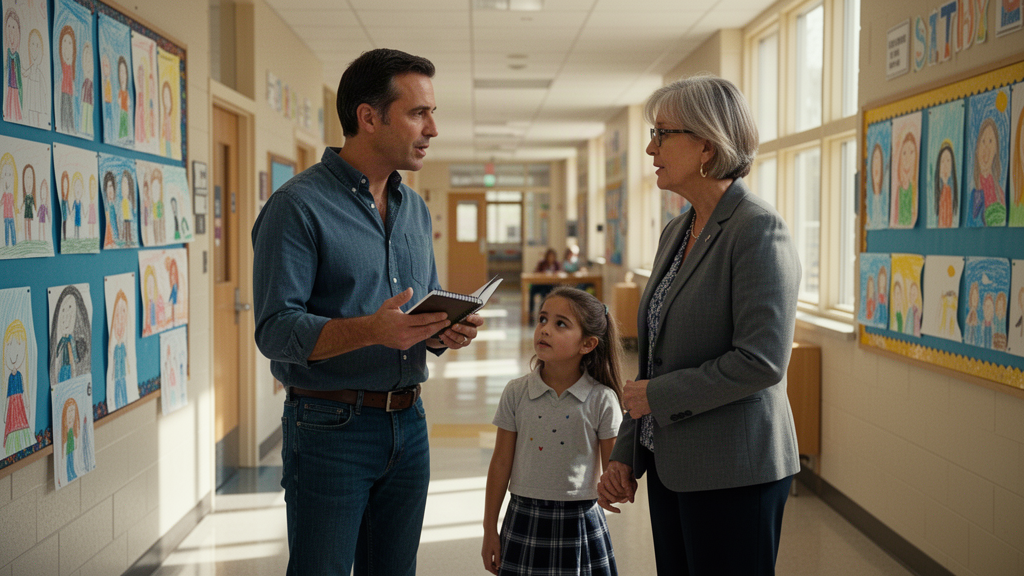
If possible, tour while students are in class. Ask whether you can observe more than one grade, and whether there is time to speak with a teacher, counselor, family liaison, or administrator. Bring a short list of priorities rather than trying to ask every question. For one family, a safe walking route may matter most; for another, language support, a predictable schedule, or a strong reading program may be essential.
Before the tour, look up the school’s grade span, location, calendar, and enrollment process. Read the relevant Ohio School Report Card, but treat it as one source—not a complete picture of the school or a guarantee of what your child’s experience will be. Look at the individual components that matter to you, and write down anything you want the school to explain. Ohio’s state report-card site includes school and district data and encourages families to pair it with visits and conversations. ([reportcard.education.ohio.gov](https://reportcard.education.ohio.gov/?utm_source=openai))
Questions to ask on a school tour
### 1. What will my child learn, and how will I know they are making progress?
Try questions such as:
• “What does a typical day look like for this grade?”
• “How do you teach reading, writing, math, science, and social studies?”
• “How do teachers check whether students understand a lesson?”
• “If a student is behind, what happens next? If a student is ready for a challenge, what happens?”
• “How often will families receive updates about learning and progress?”
Ask for an everyday example. If staff describe extra help, ask who provides it, when it happens, and how you will learn whether it is working. If they mention enrichment, ask what it looks like for a student in your child’s grade. A clear answer should help you picture what support looks like in practice—not just hear a program name.
For elementary grades, ask how the school builds early reading skills and supports students who need more practice. For middle grades, ask how students manage changing teachers, assignments, and expectations. If the school mentions test results, ask which grades and years the information covers and how teachers use it to plan instruction.
### 2. How does the school help students feel safe, included, and ready to learn?
You might ask:
• “How do students learn the school’s behavior expectations?”
• “What happens when a student is repeatedly teased, excluded, or bullied?”
• “Who can a student go to for help during the day?”
• “How do you respond when a student is upset or having a hard day?”
• “How do you help new students feel welcome?”
Listen for a process: who receives a concern, how families are informed, and how the school follows up. You can also ask what you might see in classrooms, hallways, and common areas that shows students are treated with respect. No single answer can guarantee that problems will never happen. What matters is whether staff can explain how they respond and how families can raise concerns.
### 3. What support is available for different learners?
Ask how the school supports students who are learning English, need extra academic help, or benefit from advanced work. If your child has a disability or may need accommodations, you can ask general questions without sharing private documents on a tour. For example:
• “Who can explain the school’s process for discussing student supports?”
• “How do classroom teachers work with support staff?”
• “How are families included in conversations about a student’s progress?”
• “Who should I contact if I have questions after the tour?”
Ask who coordinates support, how you can arrange a private conversation, and what the school’s next steps are if a student needs help. Ohio provides family resources about special education and parent rights; for questions about a specific situation, contact the school or an Ohio family-support resource directly. ([education.ohio.gov](https://education.ohio.gov/Topics/Special-Education/Families-of-Students-with-Disabilities?utm_source=openai))
### 4. What do arrival, dismissal, and transportation look like?
For many urban families, the daily trip can make or break a school choice. Ask:
• “What time does the school day begin and end?”
• “What are the arrival and dismissal routines?”
• “Is bus transportation available for our address, and how do we confirm?”
• “Where do students wait, and who supervises them?”
• “What happens if a caregiver is late or plans change?”
• “Are before- or after-school options available? What are their hours, costs, and sign-up steps?”
Do not rely on a general statement like “we have buses” or “care is available.” Ask whether the service applies to your address and grade, whether space is limited, and how to confirm current schedules and fees. If you would walk, bike, or use public transit, consider checking the route at the times your family would actually travel.
### 5. How does the school partner with families?
Ask what communication looks like in a typical month. Which tools does the school use? Who answers questions? Can families get information in their preferred language? How can caregivers participate if they cannot come during the workday? Ask how the school handles a family concern that does not get resolved in the first conversation.
You could also ask whether the school has family events, community partnerships, or a family liaison. Then ask what participation looks like in practice. A welcoming answer makes space for different work schedules, languages, and ways of being involved.
### 6. What do we need to know about enrollment and school choice?
Ask for the exact application or enrollment steps, who is eligible to apply, required documents, and the current dates. Also ask what happens if a grade is full, when families hear back, and whether a tour or application affects the chance of getting a seat. Get the answers in writing or ask where to find the official policy.
Ohio families exploring public-school options should check the rules for the specific school or district. Open-enrollment policies and application procedures can differ, and districts set their own processes and schedules where applicable. Ohio’s state guidance says to contact the district for current information; it also notes that families enrolling across district lines are generally responsible for transportation, though they should ask whether the district can offer any transportation. Verify current policies and deadlines directly before making plans. ([education.ohio.gov](https://education.ohio.gov/Topics/Ohio-Education-Options/Open-Enrollment?utm_source=openai))
Practical steps after the tour
1. **Write down what you saw and heard.** Separate direct observations from answers staff gave you. Note what you still need to confirm.
2. **Compare schools using the same questions.** A simple chart can help you weigh teaching, student support, safety, travel, schedule, and family communication.
3. **Check official information.** Review the current Ohio School Report Card and the district or school’s enrollment materials. Remember that ratings summarize selected measures, not every part of a student’s daily experience. ([reportcard.education.ohio.gov](https://reportcard.education.ohio.gov/?utm_source=openai))
4. **Follow up in writing.** Email the right school or district contact to confirm details such as transportation, program availability, application dates, fees, and who to call with questions.
5. **Talk with your child.** Ask what felt comfortable, confusing, or exciting. Their reaction is one helpful part of the decision, alongside your family’s needs and verified information.
Privacy reminder
A tour is for learning about the school—not for handing over sensitive information. You do not need to share confidential medical, IEP, custody, discipline, immigration, or other private child records during a general visit. If a private conversation is appropriate, ask who needs the information, why it is needed, how it will be protected, and what the next step is. Share records only through the school’s appropriate process when needed; do not post them in public or send them through an unverified channel. Ohio’s family guidance explains that schools must protect student and family personal information. ([education.ohio.gov](https://education.ohio.gov/Topics/Student-Supports/English-Learners/AOEL/Family-Roadmap/Your-Education-Rights?utm_source=openai))
Four frequently asked questions
### Should I tour more than one school?
If you can, yes. Visiting two or more schools makes it easier to compare the daily routines and get a feel for what matters to your family. If time is limited, ask for a phone or virtual conversation and request written answers to your top questions.
### What should I bring to a school tour?
Bring a short question list, a way to take notes, and any practical questions about your child’s grade or schedule. You generally do not need to bring private student records to a general tour. Ask the school what documents are needed later for enrollment and how to submit them securely.
### Can I rely on the Ohio School Report Card to choose a school?
Use it as one tool. It offers state-reported information about school and district performance, but it cannot show everything about a particular classroom, your child’s daily commute, or how the school communicates with your family. Combine it with visits, direct questions, and current school information. ([reportcard.education.ohio.gov](https://reportcard.education.ohio.gov/?utm_source=openai))
### What if the school cannot answer one of my questions during the tour?
That is a good reason to follow up—not necessarily a reason to rule the school out. Ask who can provide the answer, when you might expect it, and where the current policy or information is posted. For enrollment rules, transportation, support services, and dates, confirm details with the responsible school or district office.
Make your next step easier
Choosing a K–8 school is a big family decision, and you do not have to sort through every option alone. Use the Onward Families navigator to organize your priorities, explore questions to ask, and plan your next conversation. Then verify current openings, eligibility, services, transportation, and deadlines directly with the school or district.