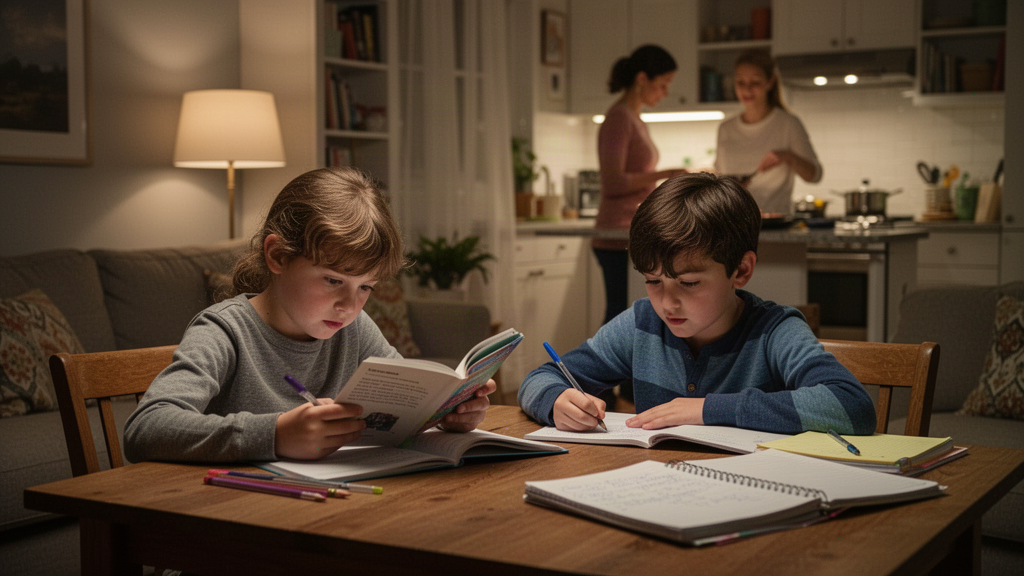
Quick answer
Keep it simple: choose a regular time and a comfortable place, start with a quick check-in, do one or two short learning activities, and finish by noticing what went well. A **home learning routine elementary school** families can stick with is more useful than a long plan that works only on perfect days. For younger children, learning can be part of play and daily tasks. Older children can help plan their own study blocks.
Your routine is meant to support school learning and curiosity—not replace a teacher, tutoring, or school services. It can fit around work schedules, caregiving, siblings, shared spaces, and the things your family already does.
Start with a routine that fits your real life
A routine is a repeatable pattern, not a strict timetable. Pick a time that is usually available: after a snack, after a little outdoor play, or before a favorite evening activity. Some children need a chance to unwind after school; others prefer to finish a short assignment first. Try one approach for a week, then adjust together.
Choose a learning spot that is safe and comfortable. A desk is not required. A kitchen table, a cleared corner, or a quiet spot beside an adult can work. Keep basic supplies nearby if you have them—paper, pencils, books, and any school materials. If space is shared, use a folder or small bag to put materials away when learning time ends.
Make a plan with your child. Ask, “What helps you get started?” and “What should we do if you get stuck?” For a younger child, offer two choices. For an older student, let them choose the order of tasks and use a checklist or timer if that helps. A routine should build independence gradually, not turn a caregiver into a full-time teacher.
A simple routine you can adapt
Use this four-part pattern as a starting point. The minutes are examples, not rules. Shorten it when your child is tired or your household is busy.
1. **Check in (2–5 minutes).** Have a snack or drink, put away distractions if possible, and ask what is due or interesting today. For children who do not bring home assignments, ask about one thing they noticed or learned.
2. **Read, listen, or tell a story (10–20 minutes).** Read together, take turns, listen to an audiobook, look through a picture book, or talk about a story. For a PreK child, name pictures and invite them to tell what might happen next. For an older child, ask what stood out and why. Shared book reading and conversation can build language and knowledge, especially for young children. ([ies.ed.gov](https://ies.ed.gov/ncee/wwc/PracticeGuide/30?utm_source=openai))
3. **Practice one skill (10–20 minutes).** Follow the teacher’s assignment or choose a small activity connected to current learning. For example, count steps, sort laundry, compare prices while making a shopping list, write a note, or practice a few math problems. Ask your child to explain their thinking rather than racing for the right answer. Everyday activities can make math meaningful for young learners. ([ies.ed.gov](https://ies.ed.gov/ncee/wwc/practiceguide/18?utm_source=openai))
4. **Wrap up (2–5 minutes).** Ask, “What felt easy?” “What was tricky?” and “What would you like help with?” Put school materials where they can be found tomorrow. Praise effort, asking for help, and sticking with a task—not only correct answers.
A sample after-school rhythm might be: snack and a break; a short homework or reading block; movement or play; then dinner and family time. Your order may be different. If a child has several assignments, ask them to identify what is due soonest, break a larger task into smaller parts, and take short breaks between focused blocks.
Adjust the plan by age and stage
• *PreK and kindergarten:** Keep activities playful and brief. Read together, sing rhymes, talk about shapes, count snacks, build with blocks, or draw and tell a story. Young children learn through conversation, play, and repeated routines. If attention fades, stop and try again later.
• *Grades 1–3:** Make reading a regular shared activity and practice skills the teacher has identified. Let your child read aloud if they are ready, but also read to them. Use household objects for counting and simple measurement. In Ohio, families of K–3 students can ask the school about reading screening and support. Ohio’s Third Grade Reading Guarantee includes reading diagnostics and school support for children who are not on track; if the school shares a concern, ask what it means and what instruction or next steps are planned. Policies and school processes can change, so confirm details with your child’s school and the Ohio Department of Education and Workforce. ([education.ohio.gov](https://education.ohio.gov/Topics/Learning-in-Ohio/Literacy/Third-Grade-Reading-Guarantee/Third-Grade-Reading-Guarantee-Family-Resources?utm_source=openai))
• *Grades 4–5:** Invite your child to keep track of assignments and choose which task to do first. Try brief review sessions on different days rather than leaving all practice to one night. The What Works Clearinghouse recommends spacing learning over time as a way to support learning and memory. ([ies.ed.gov](https://ies.ed.gov/ncee/wwc/PracticeGuide/1?utm_source=openai))
• *Grades 6–8:** Have your child use a planner, school portal, or paper list to track projects and deadlines. Help them divide a big assignment into steps: understand the directions, gather materials, make a first attempt, and check the work. Encourage them to contact a teacher when directions or feedback are unclear. Your role can shift toward asking questions and helping them plan, while the student does the work.
Make it work in a busy household
• **No quiet room?** Try a predictable seat at the table, a library visit when practical, or a short activity while an adult is nearby. Reduce interruptions where you can, but do not wait for perfect silence.
• **No printer or paid learning app?** Use school-provided materials, library books, paper, household objects, and conversation. Check with the school or local library about available resources; hours and services vary, so verify directly.
• **Several children need help?** Give each child a small independent task while you spend a few minutes with another. Older siblings can read independently, but should not be made responsible for teaching or supervising younger children.
• **Work shifts or changing schedules?** Attach learning to something that already happens, such as reading before bed or counting and talking during dinner preparation. A routine can happen at a different time on different days and still feel familiar.
• **A child resists or gets frustrated?** Pause and find out what is getting in the way. The task may be too hard, too long, unclear, or badly timed. Offer a break, reduce the task to one small step, and contact the teacher if the same problem keeps coming up.
Use screens when they serve a clear purpose, such as accessing a teacher’s assignment or an approved learning activity. Balance screen tasks with conversation, reading, movement, sleep, and offline play. The American Academy of Pediatrics encourages families to consider whether media use leaves enough time for these other parts of children’s lives. ([healthychildren.org](https://www.healthychildren.org/English/family-life/Media/Pages/kids-and-screen-time-5-cs-questions-for-school-age-children.aspx?form=XCXCUUZZ&utm_source=openai))
Questions to ask your child’s teacher or learning provider
A short message or conversation can help you focus home practice on what the child is learning in class. Ask:
• What is one skill we can practice at home this week, and what is a good example?
• How much time do you expect homework to take for my child?
• If my child is stuck, should we keep trying, make a note, or stop and contact you?
• What no-cost books, activities, or school materials can families use?
• How can I learn about progress and what support is available at school?
• If a routine is difficult because of our schedule, language, or access to materials, who should I contact to talk through options?
You do not need to turn home practice into a second classroom. If work regularly causes tears, takes far longer than expected, or seems far beyond your child’s current skills, share that pattern with the teacher and ask what to do next.
Ohio-specific support—and what to verify
Ohio’s Department of Education and Workforce offers family resources about reading, assessments, and understanding school information. The state also explains families’ role in engaging with schools and points caregivers to the Family Roadmap. Ask your district or school for current, local guidance; schedules, available supports, materials, and access may differ by school. ([education.ohio.gov](https://education.ohio.gov/Topics/Testing/Testing-Forms-and-Resources/Parent-Resource-Toolkit?utm_source=openai))
For a K–3 reading concern, ask the school how your child’s reading results connect to classroom instruction and what support will happen during the school day. The state’s family resource page suggests talking with the teacher about the skills to practice and how progress is going. Home practice can help, but it is not a substitute for asking the school about needed instruction or support. ([education.ohio.gov](https://education.ohio.gov/Topics/Learning-in-Ohio/Literacy/Third-Grade-Reading-Guarantee/Third-Grade-Reading-Guarantee-Family-Resources?utm_source=openai))
Protect your child’s privacy
When asking for help online or using a family navigator, share only what is needed to get general guidance. Do not post or send a child’s medical details, IEP, custody information, discipline records, student ID, or other confidential documents. Contact the school directly through its approved channels if a private record or individual education concern needs attention.
FAQs
### How long should home learning take each day?
There is no single time that fits every child or grade. Start with a short, manageable block and follow the teacher’s guidance about assigned work. Reading, conversation, and everyday learning can happen in small moments, too. If homework regularly takes much longer than expected, ask the teacher what they recommend.
### What if my child has no homework?
That is okay. Read together, talk about the day, play a math or word game, or invite your child to explain something they are curious about. A routine can support interest and confidence without adding worksheets.
### Should I correct every mistake?
No. Encourage your child to explain their thinking and try again when appropriate. If you are unsure how a skill is taught in class, ask the teacher before introducing a different method. Make a note of repeated confusion and share it with the teacher rather than turning practice into an argument.
### What if our routine keeps changing?
Keep one or two familiar cues, such as reading after dinner or checking the school bag before bed. A routine can be flexible. If a day is too busy, a short conversation or story still counts as a moment of connection and learning.
Take one small next step
Choose one repeatable learning moment for this week: a bedtime story, a homework check-in, or five minutes of math during a daily task. Notice how your child responds, then adjust. For more Ohio family resources and practical ideas matched to your needs, explore the **Onward Families navigator**. Use it to find a starting point, then verify current details directly with the school or provider.